Roush at 50: A Half-Century of Engineering Excellence Powering America’s Propulsion Future
Livonia, MI – July 31, 2026 – As America prepares to mark 250 years of progress, Roush reaches a milestone of its own. Founded in 1976 by legendary motorsports engineer Jack Roush, the company turns 50 this year — a half-century shaped by disciplined engineering, a performance-driven culture, and a commitment to solving problems that matter. Over those five decades, Roush has grown from a humble racing and performance shop into a broad engineering and product development enterprise. Today, that same engineering foundation underpins work in next-generation propulsion — advancing fuel flexibility, improving efficiency, and supporting cleaner engine technologies at a moment when those capabilities are more consequential than ever.
What began as Jack Roush Performance Engineering has become a broad engineering enterprise — headquartered in Livonia, Michigan, with more than 3,000 employees, 20-plus facilities across the US, and customers in over 30 countries. That growth has been purposeful. The company’s portfolio — Roush Industries, Roush Performance, Roush CleanTech, and Roush Power Systems — reflects decades of organic expansion, each division rooted in the same engineering discipline that defined the company from the start.
Roush CleanTech, established in 2010, has built a meaningful track record in alternative fuel systems — with more than 50,000 propane and natural gas-powered vehicles now operating across 2,500-plus fleets and more than 3 billion miles accumulated on the road. Roush Power Systems, which began operations in 2025, continues that work in advanced powertrain development, supporting commercial, industrial, and specialty applications where performance, efficiency, and reliability are non-negotiable.
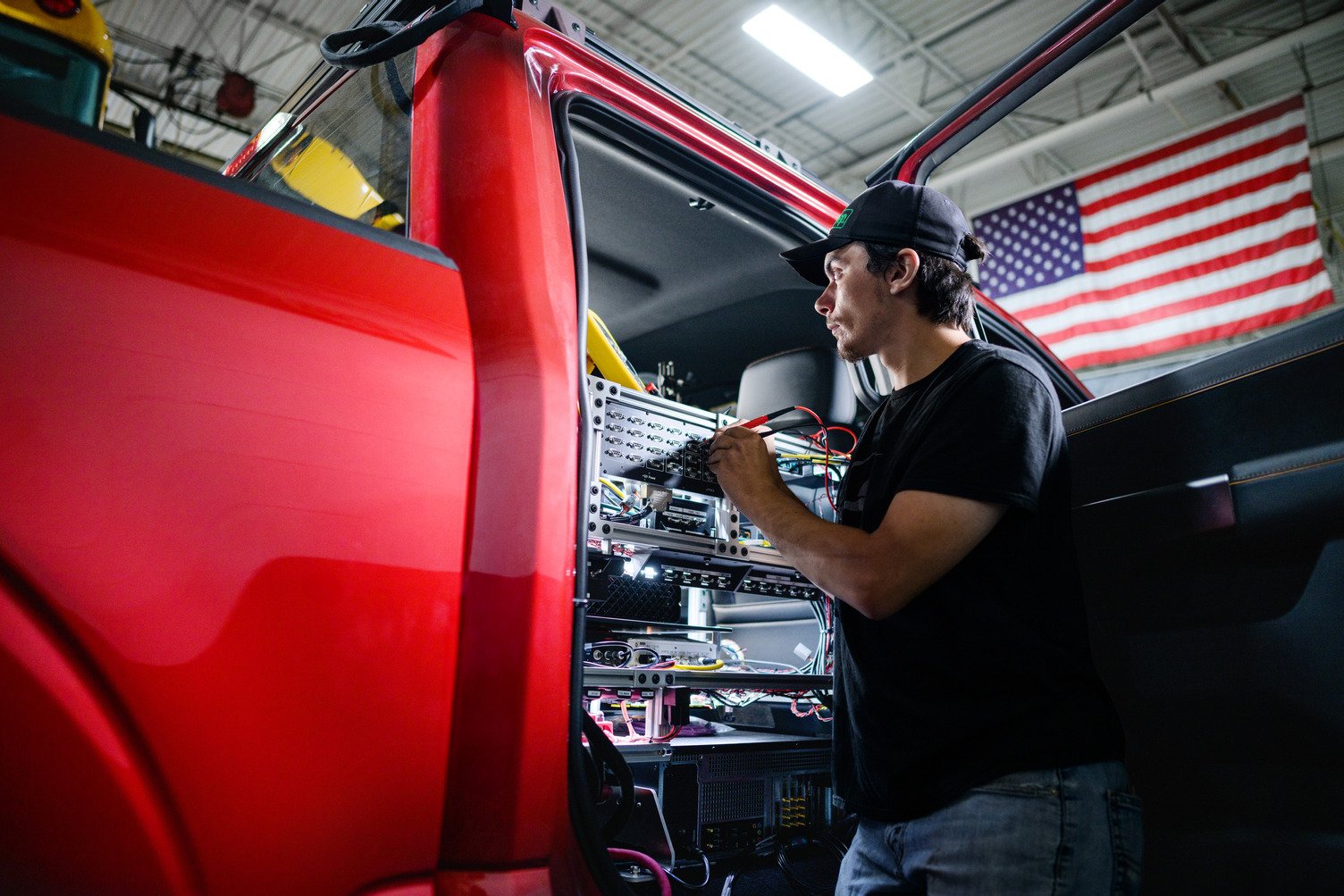
Across propulsion disciplines, Roush’s engineering work encompasses advanced propulsion development, emissions testing, dynamometer testing, controls and software, modeling and simulation, and full vehicle engineering and integration. The breadth of that work reflects where the industry is heading. A recent collaboration with Yamaha Marine — developing a prototype hydrogen-fueled boat — illustrates how Roush is engaging with emerging low-carbon fuel pathways, not as a departure from its core, but as a natural extension of the engineering work the company has always done.
As America approaches its 250th anniversary, Roush marks 50 years of engineering work that has quietly shaped how vehicles move, how fleets operate, and how propulsion technology evolves. The company’s next chapter is built on the same foundation as its first — rigorous engineering, long-term partnerships, and a willingness to engage with the hardest problems in the field. That continuity, more than any single milestone, is what positions Roush as a durable contributor to American industrial progress.